Decluttering: At What Age Should You Get Rid of Stuffed Animals?
Stuffed animals often hold great sentimental value for both children and parents. They're soft, comforting, and sometimes even lifelong companions. But as children grow, a question often arises: at what age should you get rid of stuffed animals ? The answer isn't always obvious and depends on emotional attachment, available space, and the child's maturity.
In this article, we'll look at when to declutter toys, including stuffed animals, and how to manage an overflowing collection while respecting your child's feelings.

At What Age Should a Child Stop Sleeping With Stuffed Animals?
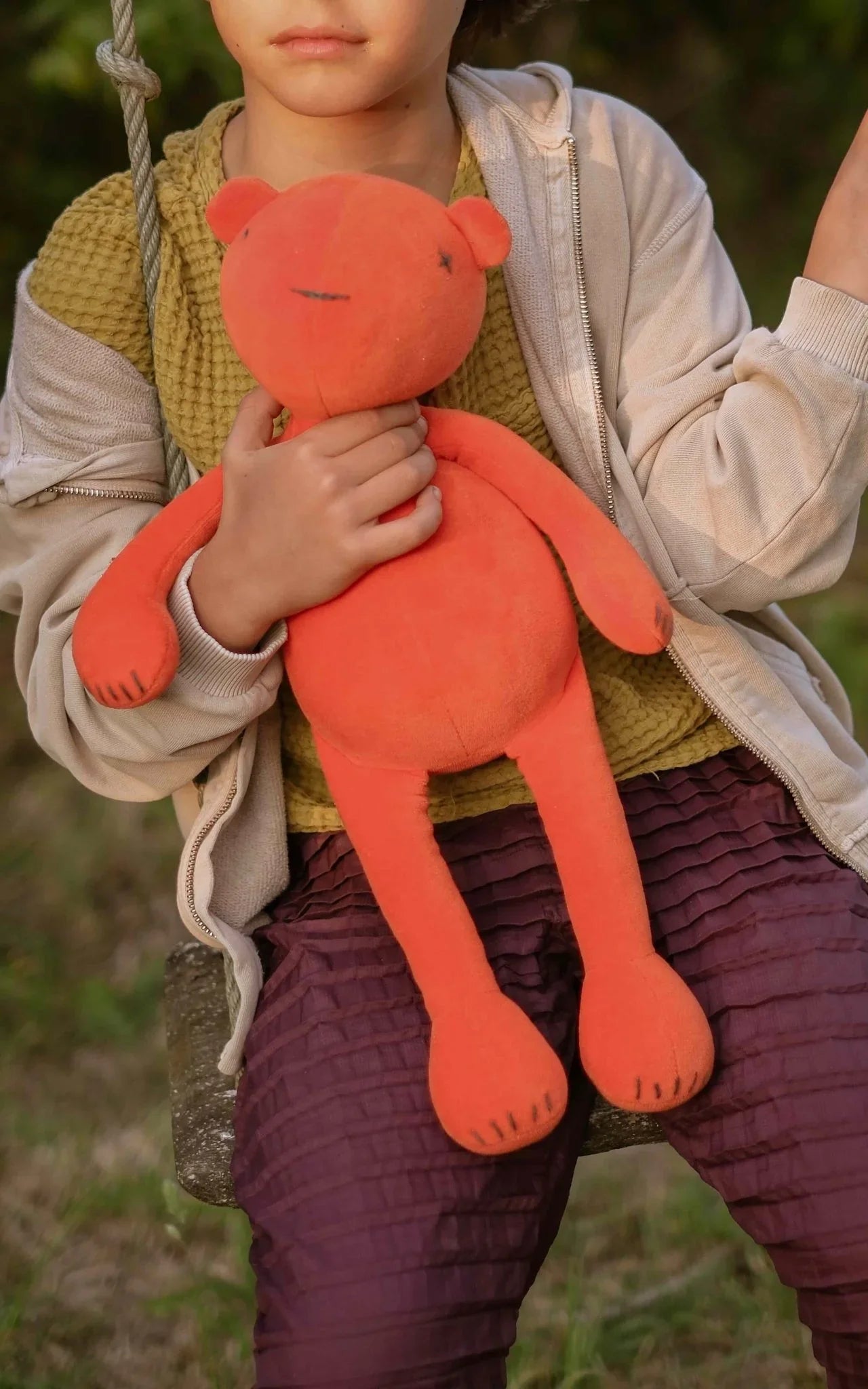
There's no specific age at which a child should stop sleeping with a stuffed animal. Many children begin to naturally grow out of it between the ages of 7 and 10 , but others keep a favorite comforter or stuffed animal well into adolescence or even adulthood. Psychologists agree that this is perfectly normal: stuffed animals provide comfort, stability, and a sense of security.
So, if you're wondering at what age a child should stop sleeping with stuffed animals , it might be more helpful to ask: Are they emotionally ready to part with some of them?

When to Declutter Toys and Stuffed Animals
The right time to sort varies from child to child, but here are some helpful guidelines:
-
Before a major transition : moving, going back to school or changing rooms are good opportunities to sort things out.
-
When the bins are overflowing : if storage becomes unmanageable, it's time to sort.
-
During birthdays or holidays : When new toys arrive, it's a great time to say goodbye to some old ones.
-
After 5 years : At this age, most children are able to help decide which toys or stuffed animals they want to keep.
How to Manage a Plush Collection
If your house is overflowing with stuffed animals, here are some practical strategies:
-
Set boundaries : Limit stuffed animals to one bin, shelf, or part of the bed.
-
Use a rotation system : store some of them and rotate them every few months.
-
Create a memory box : Let your child choose a few "forever friends" to keep in a special box.
-
Make it fun : turn sorting into a game – suggest that they “adopt” the less used stuffed animals.
When to Give or Keep Stuffed Animals
Here are some criteria for deciding what to keep and what to give away:
-
Keep if :
-
It has strong sentimental value.
-
Your child still sleeps with it.
-
It was a special gift or an inherited item.
-
-
To give if :
-
Your child no longer remembers her name or where she comes from.
-
It just takes up space.
-
It is clean, in good condition, and could make another child happy.
-
Many charities, shelters, and hospitals accept stuffed animals, but check their policies—some only accept new or lightly used toys for hygiene reasons.

In Conclusion
So, at what age should you get rid of stuffed animals ? The answer depends on each child. Rather than setting a specific age, listen for signs that your child is ready to part with them—and guide them with kindness. Whether you're looking to save space or preserve memories, the goal is to find a balance between emotional attachment and practical need.
Decluttering doesn't mean throwing everything away. With a little thought and creativity, you can manage your child's stuffed animal collection while respecting their feelings and regaining space in your home.